
How to Winterize Your RV: A Step-by-Step Guide From a Mobile RV Tech
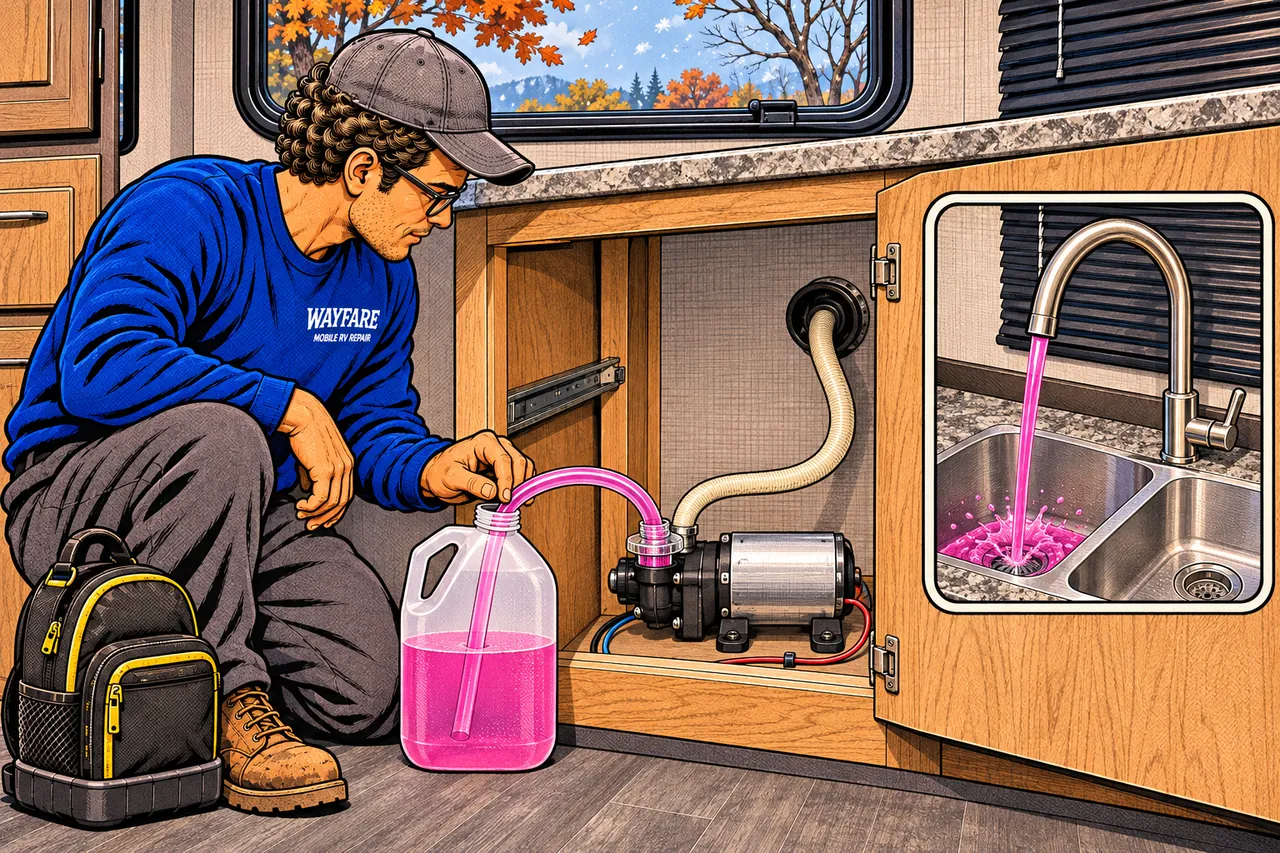
Every spring I find the same freeze damage: a cracked water pump strainer, a split fitting behind the shower, a toilet valve that won't hold water. Almost every one of them came from a winterization that missed a step, or didn't happen at all.
Here in Harford County we get plenty of nights well below freezing. If your RV is going to sit for the winter, the water system needs to be protected. You can do it yourself with an afternoon and a few jugs of RV antifreeze, or I can do it for you.
The short answer: drain the tanks and the water heater, bypass the water heater, then push RV antifreeze (the pink kind, never car antifreeze) through every faucet, drain and fixture until it comes out pink.
🔧 First, What's Normal

There are two common ways to winterize:
- RV antifreeze. You fill the lines with pink, non-toxic RV antifreeze using the water pump. This is the most common way and the one I recommend for most people.
- Blowing out the lines. You push the water out with compressed air at low pressure. It uses less antifreeze, but a little water always stays in low spots, so most people still pour antifreeze in the drains.
A few things that surprise people:
- With a regular tank water heater, you don't put antifreeze in it. That's what the bypass valves are for. A 6- or 10-gallon tank would waste a lot of antifreeze.
- Tankless (on-demand) water heaters are different. Newer RVs often have one, and each brand has its own winterizing steps: some get drained, some get antifreeze run through them, and some need a special valve or setting. Check the owner's manual for yours, or let me handle it.
- Most RVs take about 2 to 3 gallons. Bigger rigs with a washer, ice maker or second bathroom take more.
- Use only RV antifreeze. It's made for drinking water systems. Car antifreeze is poisonous and should never go in an RV's plumbing.
- Use it full strength. Don't mix it with water. Watered-down antifreeze only protects to a much warmer temperature than the bottle says.
- Slushy antifreeze is OK. On a very cold night the antifreeze in your lines can turn to slush. Unlike water, it doesn't expand when it does, so it won't crack anything. That's the whole reason it works.
🧰 What You'll Need
- 2 to 3 gallons of RV antifreeze (more for a big rig)
- A water pump winterizing kit (a short hose on the pump's inlet), if your RV doesn't have one built in
- The right tool for your water heater's drain plug or anode rod
- A flashlight, gloves, and a bucket
✅ Step by Step
1. Empty and flush the holding tanks
Dump the black tank first, then the gray tank, and flush the black tank if you can. Leave both valves closed when you're done.
2. Drain the fresh water tank
Open the fresh tank drain and let it empty. Turn the water pump off and disconnect the city water hose.
3. Drain the water heater
Turn the water heater off (gas and electric) and let it cool. Then open a hot faucet to release the pressure, and remove the drain plug or anode rod.
- Suburban water heaters have an anode rod. This is a good time to look at it and replace it if it's mostly eaten away.
- Atwood/Dometic water heaters have a plastic drain plug and no anode rod. Don't put an anode rod in one.
More on anode rods, sediment and yearly care in my RV water heater maintenance guide. If the anode rod is stuck, the threads are leaking, or the water heater gives you trouble, see my RV water heater repair page.
Never open the water heater while it's hot or under pressure.
Tankless water heater? Skip this step and step 5, and follow the manufacturer's winterizing steps for your model instead.
4. Open the low-point drains
Most RVs have two low-point drain lines (hot and cold) under the RV. Open them and let the lines empty. Open the faucets inside to let air in so they drain faster. Then close the low-point drains and the faucets again.
5. Bypass the water heater
Turn the bypass valves so water skips the water heater. If your RV doesn't have bypass valves, they're worth adding, and I can install them. See my RV water heater repair page.
6. Hook up the antifreeze
Put the winterizing hose from the water pump into the antifreeze jug, or turn the pump's winterizing valve. Remove the cartridge from any whole-house water filter.
7. Pump antifreeze through every fixture
Turn the water pump on. Then, one at a time, starting closest to the pump and working out to the farthest:
- Open the cold side until it runs pink, then the hot side, on every faucet
- The shower (and the outside shower, if you have one)
- Flush the toilet until the bowl water is pink
- The ice maker and washer lines, if you have them (check your owner's manual)
8. Pour antifreeze in the drains
Pour a cup or two into every sink and shower drain so the P-traps are protected, and a little in the toilet bowl.
9. Don't forget the city water inlet
Unscrew the screen in the city water inlet and push it gently until a little antifreeze comes out, or blow it out.
10. Finish up
Turn the water pump off, switch it back from the antifreeze, and leave the water heater bypassed. Put a note on the faucet so nobody turns the water heater on with an empty tank in the spring.
⚠️ The Spots People Miss
These are the places I find freeze damage most often:
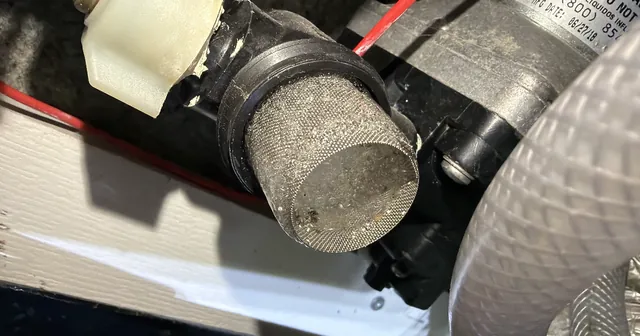
- The water pump's strainer. If water is left in the clear bowl in front of the pump, it cracks.
- The outside shower. Easy to forget, and it sits right on the outside wall.
- The whole-house water filter housing.
- The ice maker and washer lines.
- The low-point drains left closed with water still in the lines.
🔄 In the Spring
When it warms up, you'll flush the antifreeze out, set the bypass valves back, refill the water heater before turning it on, and check for leaks. I'll have a full spring de-winterizing guide up before the season starts.
Spring is also the best time for a water heater clean and service, and a check of the rest of the RV: the furnace, the roof seals, and the air conditioner before the first hot week.
❓ Questions I Get Asked a Lot
When should I winterize my RV in Maryland?
Before the first hard freeze, usually by late October or early November here. If the forecast calls for a few nights in the 20s, don't wait.
Can I just drain the water and skip the antifreeze?
Draining helps, but water always stays in low spots, the pump, the traps and the toilet valve. That's exactly where freeze damage happens. Antifreeze in the lines and drains is the safe way.
Is RV antifreeze safe?
RV antifreeze is made to be non-toxic for water systems, and you flush it out in the spring. Never use car antifreeze in an RV.
📍 Want Me to Winterize It for You?

I come to your RV, whether it's in your driveway, at a campground, or in a storage lot, anywhere in Harford County, Maryland, including Bel Air, Aberdeen, Havre de Grace, Fallston, Forest Hill, Jarrettsville, Edgewood, Abingdon, and Churchville.
My winterization service drains and protects the whole water system, bypasses the water heater, and adds RV antifreeze everywhere it needs to go. In the spring, my Spring Thaw & System Check gets it ready to camp again.
📞 For a price or to get on the schedule, call or text 443-499-9699, or request service online.
👉 Learn more: RV winterization and seasonal service